In the armed forces, custom patches are not merely ornamental enhancements. They represent symbols of identity, accomplishments, and distinction. Among the different kinds of military patches, Operational Camouflage Pattern (OCP) patches are unique, providing consistency while delivering functional advantages in both combat and non-combat situations.
But what precisely makes OCP patches so crucial? Whether you’re a service member on active duty or a military enthusiast, knowing the correct OCP patch placement is essential for respecting military decorum.
This detailed manual will guide you on the proper positioning of custom patches on military uniforms, the various types of OCP patches, and their meanings, ensuring your uniform adheres to standards while also reflecting your commitment and service.
What is OCP?
OCP refers to Operational Camouflage Pattern, a flexible camouflage created to merge effortlessly with different surroundings. Launched in the early 2010s, it succeeded the previous Universal Camouflage Pattern (UCP) because of its enhanced performance in various landscapes.
Although the Army and Air Force mainly wear OCP uniforms now, other military services have embraced comparable patterns, highlighting the significance of uniform OCP patch positioning. These patches, varying from unit to rank insignia, are essential for upholding discipline and unity.
Have a look: Top Trendiest Embroidered Patch Designs for Christmas
Types of OCP Patches and Their Roles
1. Unit Patches
Unit patches symbolize a soldier’s assigned command or unit. Typically placed on the left sleeve of the OCP uniform, they foster camaraderie and a sense of belonging.
Common Placement:
- Army: Left shoulder, ½ inch below the shoulder seam.
- Air Force: Similar placement with additional regulations based on uniform type.
2. Rank Insignia Patches
Rank patches denote a soldier’s position in the military hierarchy. Proper Army OCP patch placement of rank insignia is crucial for identifying leadership and maintaining order.
Common Placement:
- Army: Center of the chest or collar.
- Air Force: Chest placement varies based on rank and uniform regulations.
3. Identification Patches (Name Tapes & Service Tapes)
Identification patches, including name tapes and service tapes, ensure quick recognition of individuals in high-pressure situations.
Placement:
- Name tapes: Above the right chest pocket.
- Service tapes: Above the left chest pocket.
4. Morale Patches
Morale patches allow for personal expression, reflecting individual experiences, missions, or humor. While not officially mandated, they are often seen on combat uniforms.
Note: Morale patches are not typically worn in formal military settings but are popular in casual environments.
The Importance of Proper Patch Placement
Proper Army and Air Force OCP patch placement is vital for maintaining a professional, cohesive appearance. Misplaced patches can result in disciplinary actions and reflect poorly on the wearer. Following these guidelines helps uphold military traditions, respect for rank, and organizational unity.
For example, the US flag patch should always be placed on the right shoulder with the star field facing forward, symbolizing the march toward battle. Similarly, skill badges must be precisely aligned to reflect earned qualifications accurately.
Choosing Between Sewn and Iron-On Patches
While sewn patches offer durability, iron-on options provide convenience, especially for temporary placements. Whether you’re applying Army OCP patches or Air Force OCP patches, ensure you follow proper attachment techniques to avoid fabric damage.
- Sewn Patches: Ideal for long-term placement, offering resilience against wear and tear.
- Iron-On Patches: Perfect for quick applications but require careful heat management for secure adhesion.
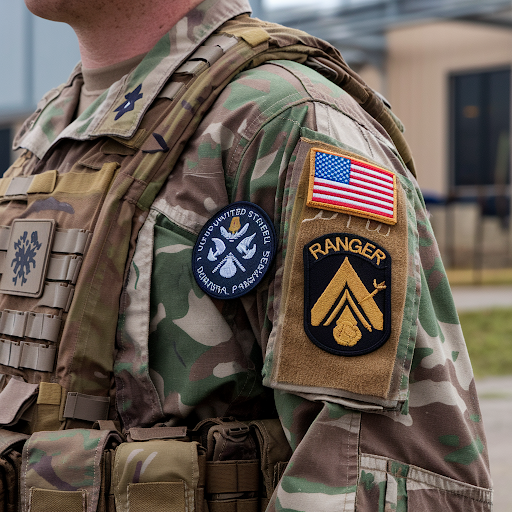
Key Guidelines for Army and Air Force OCP Patch Placement
Army OCP Patch Placement
The Army has specific rules regarding the positioning of OCP patches to maintain uniformity and respect for military hierarchy. Each patch type, from unit patches to skill badges, must be placed correctly to convey a professional appearance.
Patch Placement Breakdown:
- Unit Patches: Positioned on the left sleeve, ½ inch below the shoulder seam.
- Rank Insignia: Placed in the center of the chest or on the collar, depending on the uniform type.
- Name and Service Tapes: Located above the corresponding chest pockets.
- Skill Badges: Skill badges have designated positions on the chest or sleeve, depending on their nature and significance.
Failure to adhere to these rules can result in disciplinary actions or uniform corrections during inspections. Therefore, referencing the Army OCP uniform patch placement guide is critical for every soldier.
Air Force OCP Patch Placement
The Air Force follows similarly strict guidelines to ensure that personnel maintain a polished and cohesive look. The positioning of patches varies slightly from Army standards but remains equally meticulous.
Air Force Patch Placement Overview:
- Unit Patches: Positioned on the left shoulder, similar to Army guidelines.
- Rank Insignia: Central chest or collar, with placement determined by the uniform type.
- US Flag Patches: Always on the right sleeve, with the star field facing forward.
Ensuring proper Air Force OCP patches placement reflects discipline, respect for tradition, and an adherence to the service’s values of integrity and excellence.
Read also: Flight Emblems: Role of Custom Patches in Aviation
Maintaining Your Military Jacket with Patches
Proper maintenance of your OCP uniform ensures both the longevity of your patches and a sharp, professional appearance. Regular cleaning and inspection prevent patch detachment and fabric wear.
Tips for Sewn Patches:
- Use reinforced stitching with color-matched thread to avoid visible seams.
- Inspect stitching regularly to catch any loose threads.
Tips for Iron-On Patches:
- Follow the manufacturer’s instructions for optimal heat settings.
- Apply even pressure with an iron or heat press to ensure strong adhesion.
By caring for your patches, you maintain not only the uniform’s appearance but also the integrity of your service representation.
Why Choose Custom Patches for Military Uniforms?
Custom patches are essential for creating a distinct yet regulation-compliant military appearance. From Custom Embroidered Patches to Custom PVC Patches, personalized designs can reflect specific units, missions, or achievements.
Some popular choices include:
- Custom Chenille Patches: Soft yet durable, ideal for commemorative purposes.
- Custom Leather Patches: Perfect for rugged, high-end military gear.
- Custom Sublimated Patches: Known for their vibrant colors and fine details, ideal for morale patches.
Regardless of the material, ensuring that your patches meet military standards while offering individuality enhances your uniform’s significance.
Achieve Precision and Professionalism with Patch Makers USA
Mastering the art of OCP patch placement is essential for every military member, ensuring respect for tradition and maintaining discipline. Whether you need unit patches, rank insignia, or morale patches, Patch Makers USA is your trusted partner.
Our custom embroidered patches, tailored to military specifications, offer durability, precision, and compliance. Take advantage of our bulk discounts and superior craftsmanship to ensure your uniform reflects your dedication and achievements.
Ready to amplify your military uniform? Reach us out today for premium, regulation-compliant patches designed to honor your service and commitment.